About the Academy
What the Academy does, its history and its autistic-led governance.


The Academy alumni are a diverse group of people who help shape their communities and strengthen our work.
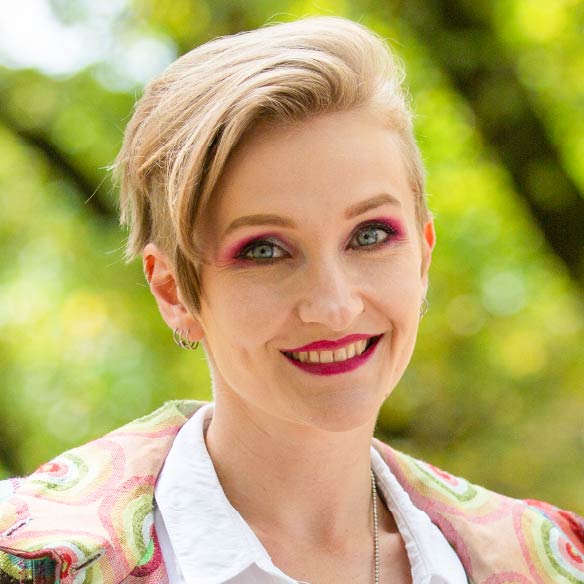
I learned that the traits I thought I had to overcome were actually qualities that make me special, loved and worthy.
Being part of Future Leaders showed Ruby that being autistic was something to celebrate.
"It gave me the skills to recognise what I need to thrive and the confidence to self-advocate for that."
Importantly, Ruby says that feeling part of the autistic community came with "a sense of ownership" and pride when learning about the history of autistic advocacy, and the motivation to advocate a better future for other LGBTIQA+ people with disabilities.
Ruby harnessed their confidence, knowledge and sense of ownership to become a prolific systemic advocate and advisor.
Ensuring a better future for LGBTIQA+ people with disabilities, they advocated for an accessible interview process and as a result gained employment as the Project Coordinator of Disability Inclusion at Thorne Harbour Health. They have also gained employment as the LGBTIQ+ Project Officer at Your Community Health, Administration Officer for Pride Foundation Australia, and serve as the Vice President of the Melbourne Bisexual Network and as a member of Autism Spectrum Australia's (Aspect) LGBTIQA+ advisory committee. Ruby has delivered neurodiversity training to the Victorian Department of Premier and Cabinet and worked as a peer researcher at Deakin University on the research project "More Than Ticking A Box: LGBTIQA+ People With Disability Talking About Their Lives".
Their passion for building resilience through community and connection, grounded in 'nothing about us without us', has led Ruby to take part in the co-design of LGBTIQA+ disability toolkits and resources. These include LGBTIQ Health Australia's toolkit Employable as well as the Advocacy at the Intersections project by queerspace and DARU.
Ruby was awarded Aspect's Inspiration Award for Individual Achievement.
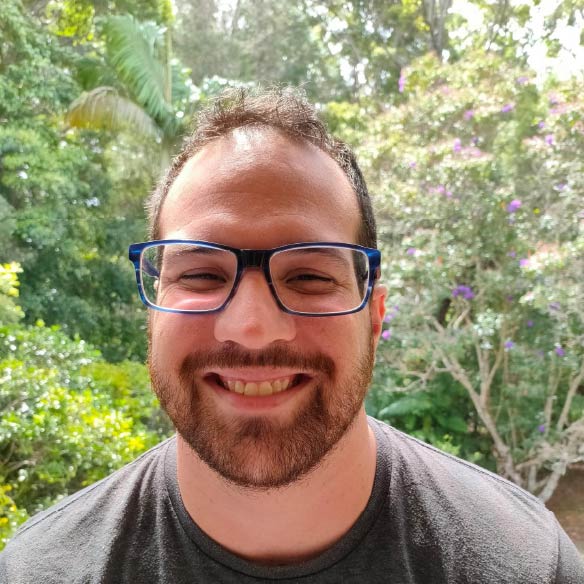
I had spent a lifetime trying to find out where I fit in, and through the program I learnt I could be myself.
Richard says he always thought his perspective wasn't valued, but through being in the program he learned that his views and lived experience were a helpful asset in research.
Meeting other autistic people and established autism researchers at the workshop helped to solidify his own ideas for research. This coupled with the confidence and perseverance he developed in the program led him to complete his honours thesis.
Richard has now completed a PhD in Youth Mental Health at Southern Cross University, with his research focused on the intersection of online gaming, motivation, and youth mental health. He examined the behavioural patterns, intrinsic motivators, and psychological profiles of young people who engage heavily in online spaces, and explored how digital community-building shapes real-world coping mechanisms, isolation, and mental health resilience among adolescents and young adults.
Richard's work also extends into disability advocacy and accessibility within digital platforms, looking at how specialised care plans can be designed for neurodivergent or vulnerable young people who navigate online gaming subcultures.
Richard is also on the board of directors of the sex chromosomal variation charity, Australian X and Y Spectrum Support (AXYS). He credits participation in the Research Program as what led him to be appointed as a director.
He says he felt "empowered after learning in the program, that you need to have the lived experience in organisations in order to affect change."
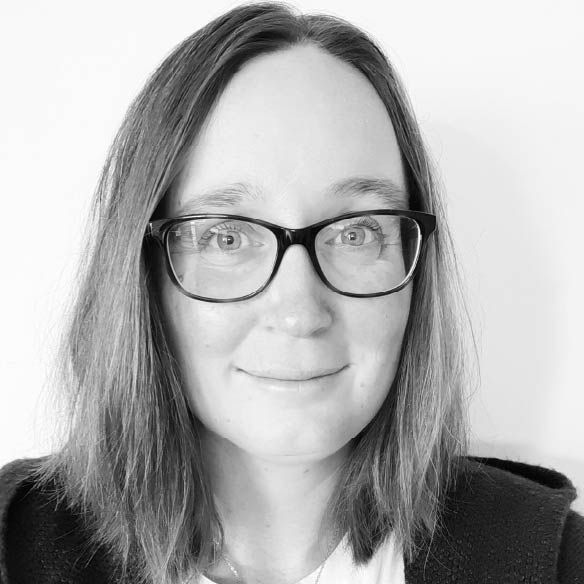
I was disconnected between my authentic self, and who I thought the world wanted me to be… that separated me from the best parts of myself.
Being part of the Future Leaders Program gave her direction and purpose.
Haley says that the program reconciled that disconnection and gave her the opportunity to learn about leadership and advocacy in a supported environment, and set relevant and realistic personal and leadership goals. She was also able to travel and meet new people outside of the remote area where she lives, enabling the building of networks and friendships across Australia.
Within six months of completing the program she gained paid jobs as a TAFE lecturer and co-facilitator in occupational therapy groups, and now has stable finances. The program also inspired her to re-engage with study, and start an advocacy and support organisation in a rural area where this is lacking.
The impact of the Future Leaders Program will be felt by others as Haley continues to advocate for herself and other autistic people, and teaches her TAFE students to facilitate the empowerment of people with disability.
Haley is excited for the future and says because of the program she could "reconcile my personal disconnection, then use my strengths and abilities to plan and fulfil some goals… it's been life changing."
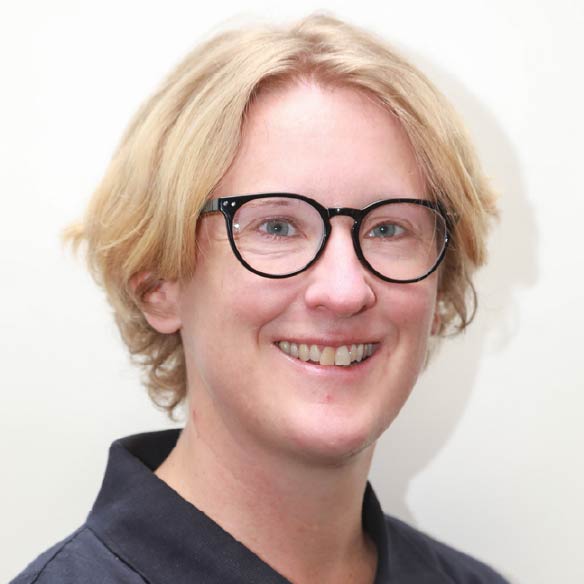
I don't usually take risks, but through the program I could try new things in a supported way.
Zoe is committed to promoting inclusion for people with disabilities. Through Future Leaders, she was able to hone her ideas and develop the confidence and skills she needed to bring them to fruition.
Since Future Leaders, Zoe has designed and run an inclusion day program at her local Surf Lifesaving Club, with the purpose of bringing together the community, including people with disabilities.
Being a part of Future Leaders was the first time Zoe had been "in a space that was fully safe… I could see things other people did and try them out myself. It's given me skills that I can take forward into everyday life."
Her inclusion day program was the winner of the Outstanding Achievement for the Lifesaving Victoria Awards of Excellence and was nominated for a Bayside Council Australia Day award. The impact of the program has continued to inspire inclusion within her broader community, with one of the program's attendees deciding to make their sports programs more accessible to children with disabilities.
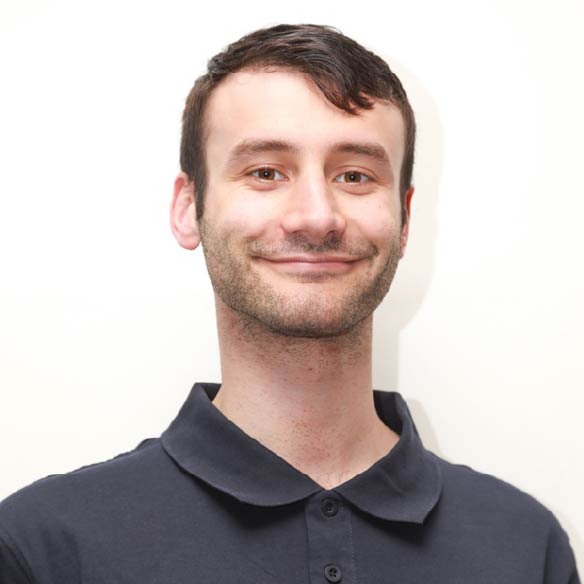
I learned a lot about myself in the program, it helped me understand my strengths and weaknesses and what areas to focus on.
Kirk says that being part of the program helped him "build resilience and motivation". Having identified his strengths through the program, as well as having refined his advocacy goals, Kirk has now finished studying User Experience and Web Design. He says that the skills he learned during Future Leaders helped him advocate successfully at university, and will help him to effect greater change in society.
Kirk is a firm advocate for society seeing autism as a difference, not a deficit. Drawing on his design skills, Kirk held a virtual exhibition exploring the difficulties autistic people have experienced during the COVID-19 pandemic.
He also continues to grow his skills in user experience design to ensure people can use digital products with ease.
He will also "…advocate through design, including crafting visual communications and user experiences that are designed to educate and change perception around autism."
Kirk credits the Future Leaders Program as having provided him with focus, structure and self-awareness. As Kirk continues to advocate for both individual and systemic change in accessible design, he will be a true trailblazer for the autistic community.
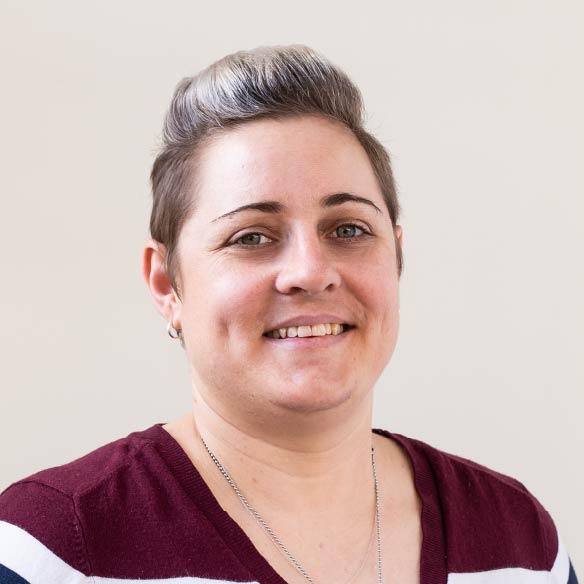
Being part of Future Leaders changed my life by showing me it is ok to be exactly who I am.
Through the Future Leaders Program Trudy gained the confidence and skills to effect change for the autistic students at a large Brisbane school with 2,600 students, where she is a teacher. "Before Future Leaders I was selectively open about being autistic in the work environment. Because of the deficit-based understanding of autism, I was not seen as being capable of a leadership position. I learned about advocacy through the Future Leaders Program, which taught me that it is ok to ask for reasonable adjustments in the workspace. Since then, I have been advocating for myself and the school's autistic students, working with their class teachers to implement strategies that help create safe and supportive environments for the students."
Trudy presented to over 800 staff and students about neurodiversity, strategies she uses for herself and her students, and what the school community can do to support other people who are neurodivergent. Trudy is now in a leadership position in the Special Education Department and runs a group for autistic students. Through the program the students have become more self-aware and have identified strategies that teachers can use to work with them better.
Since these have been implemented there has been an increase in student engagement and a reduction in behaviour referrals. "It is evident that there has been a significant change in the culture of the school for the better. There is more acceptance of students with disabilities and staff are looking at strengths-based approaches to teaching autistic students."
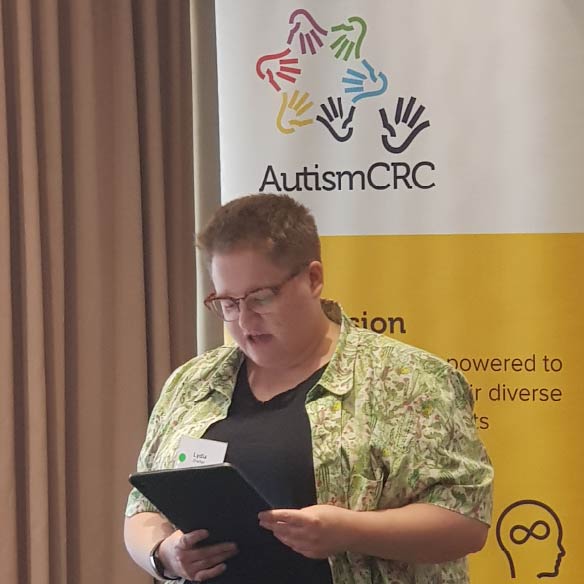
Future Leaders basically changed my whole outlook on life.
Lydia is passionate about making sure mental health services are appropriate for autistic people. "Autistic adults are nine times more likely than the general population to die by suicide but when you are autistic the whole experience (of mental health) is different. Mental health programs have to be adapted for autistic people."
As part of the Future Leaders Program, Lydia developed a poster and cards to alert professionals to the extremely high rates of mental health conditions in the autistic community, and what they need to do to more effectively communicate with autistic people. Through this Lydia met a number of influential people and has since been speaking at suicide prevention reference groups, systemic advocacy organisations and mental health events.
Because of her involvement with the Program, Lydia was selected to attend the One Young World conference in Munich, which gathers young leaders from around the world to develop solutions to the globe's most pressing issues.
Future Leaders has provided Lydia with the confidence and skills to affect change to legislation, government policy and community attitudes, but has impacted her personally.
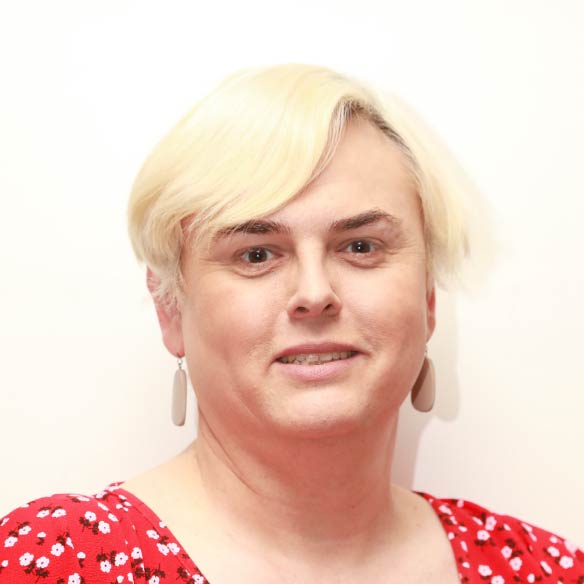
One of the biggest impacts of being a part of the program was finding my tribe in real life… it validated that I was not broken, I was different.
Rochelle says the program gave her connections and opportunities to do advocacy and activism, and through these she gained full-time employment at one of Australia's largest banks.
In her role, she now has the capacity to influence change within her workplace, creating more opportunities for the autistic community. Her employer now has an employment program specifically for autistic people, and she is part of an internal committee who advocate for supporting staff and customers who experience disability.
Rochelle also advocates for communities that intersect with autism and in her workplace she has become the Subject Matter Expert on transgender and non-binary issues, and is also part of the leadership team for Pride at her workplace. She has spoken at events, conferences and expos, as part of panels for other organisations. Through her role she has become the "go-to person" for those wanting to know more about autism and supporting autistic people in the workplace.
Rochelle says that being part of the program was life-changing and the impact for her and others "by providing a place where confidence is gained and connections are made can't be underestimated."
Autism Spectrum Australia (Aspect) ↗ was the major sponsor of Future Leaders from 2019–2022.