
Community forum guidance for engaging Aboriginal and Torres Strait Islander autistic peoples and autistic people with high and complex support needs
We worked with autistic people, families and community organisations to develop practical guidance on respectful engagement with two groups often underrepresented in research and practice development.
What we did
We brought together research evidence, professional knowledge and lived experience. This included interviews with community and professional organisations, yarning sessions with Aboriginal and Torres Strait Islander autistic people and parents, and individual engagement with autistic people with high and complex support needs and their families.
The resulting guidance provides tailored approaches for engaging with each community, building on existing participatory and inclusive autism research guidance.
What we found
For Aboriginal and Torres Strait Islander communities, meaningful engagement needs to be grounded in culture, Country and relationships. Community members emphasised empathy and care, strengths-based approaches, respect for Aboriginal and Torres Strait Islander ways of knowing, being and doing. Meaningful engagement also requires Aboriginal and Torres Strait Islander leadership, addressing racism and power imbalances, and ensuring communities have genuine influence over decisions that affect them.
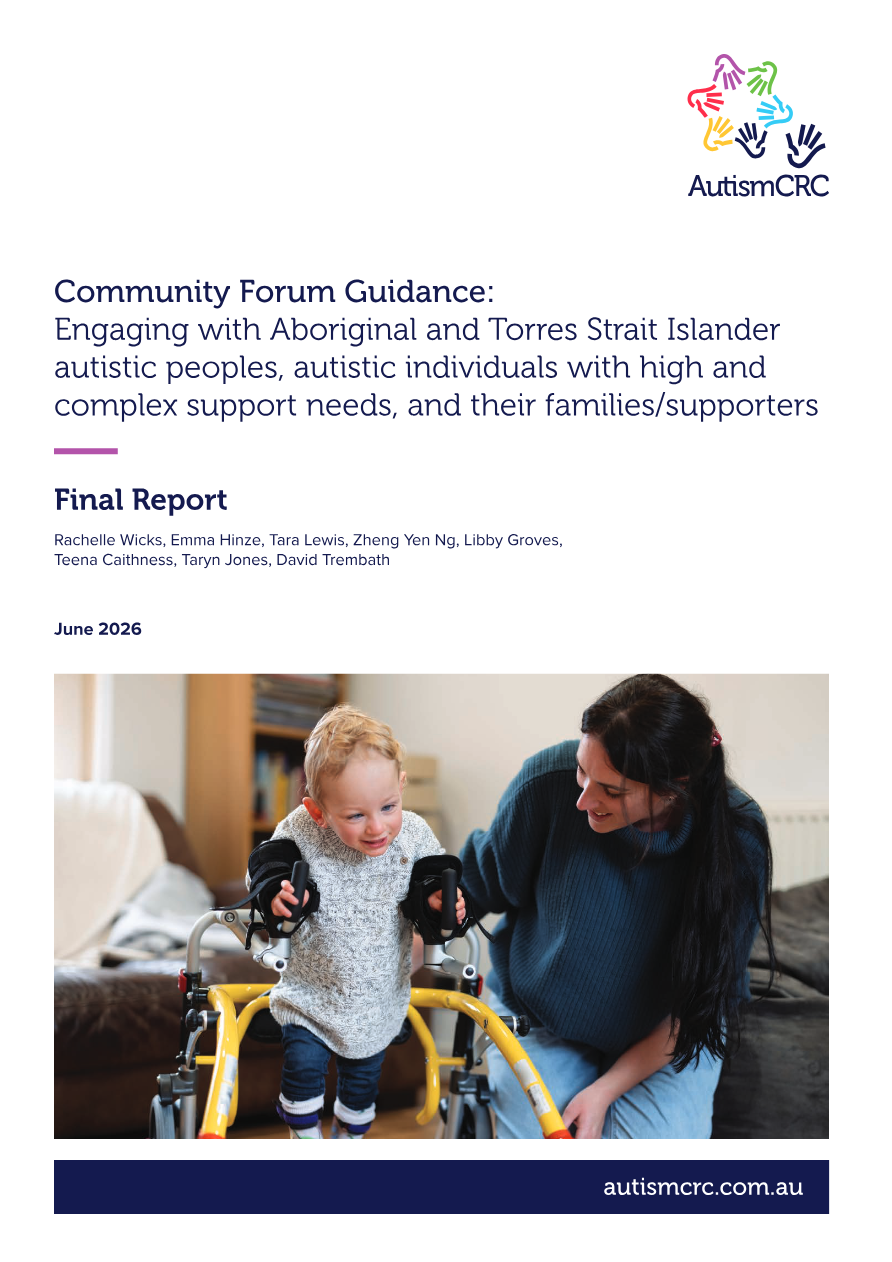
For autistic people with high and complex support needs, conventional approaches to consultation can create barriers to participation. Meaningful engagement may require familiar environments, flexible timing, different communication methods, practical supports and involvement from families or trusted supporters who know the person well. The guidance emphasises direct participation wherever possible, while recognising the important relational expertise of families and supporters.
Why this matters
People who are least well served by standard approaches to engagement can also be those most likely to be left out of the decisions that affect them. The guidance shows that inclusion is not achieved simply by extending an invitation. Engagement needs to be designed around the people and communities involved, with the time, relationships, supports and shared decision-making needed for meaningful participation.
The guidance gives researchers, practitioners, organisations and governments practical ways to plan, undertake and follow through on engagement that is respectful, accessible and accountable.
Project team
- Rachelle Wicks
- Emma Hinze
- Tara Lewis
- Zheng Yen Ng
- Libby Groves
- Teena Caithness
- Taryn Jones
- David Trembath